A Comprehensive Guide
How to Build a Proper and Healthy Hair Care Routine
From the viral curly gurl method to the sleek-straight hair look, you'll surely want to find a hair care routine that works for you. Read our visual guide here!
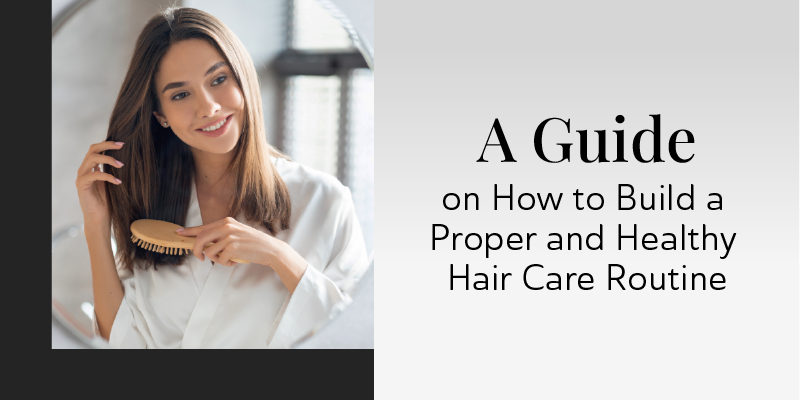
If you’re one of those who take immense pride in their hair, you're certainly not alone. Having a head of strong and lustrous locks is a goal shared by many Filipinas and is often referred to as their "crowning glory." As today’s times focus on inner beauty, health, and wellness, it’s no surprise that haircare has slowly joined the trend.
In the Philippines, the hair care industry is predicted to grow more than 3% in 2021 to 2026, compared to its value of PHP 57.2 billion ($1.2 billion) in 2021. These numbers indicate a clear need for hair care products and the importance of launching new products.
The demand for hair care services and products in the Philippines shows its importance. It would be best to establish a proper hair care routine to achieve the desired look of healthy, shiny, and sleek hair. Keeping hair healthy isn’t easy, but it's definitely worth the effort.
To get the best results with your haircare routine, refer to the detailed visual guide below. It contains all the information you need to ensure that your hair looks and feels its absolute best.
How to Build a Proper and Healthy Hair Care Routine
Understanding Your Hair Type
Understanding your hair’s texture, porosity, and curl pattern is crucial for maintaining healthy hair. Products that may be beneficial for one type of curly hair may be detrimental to another, and being aware of your hair type can help determine which works for you.
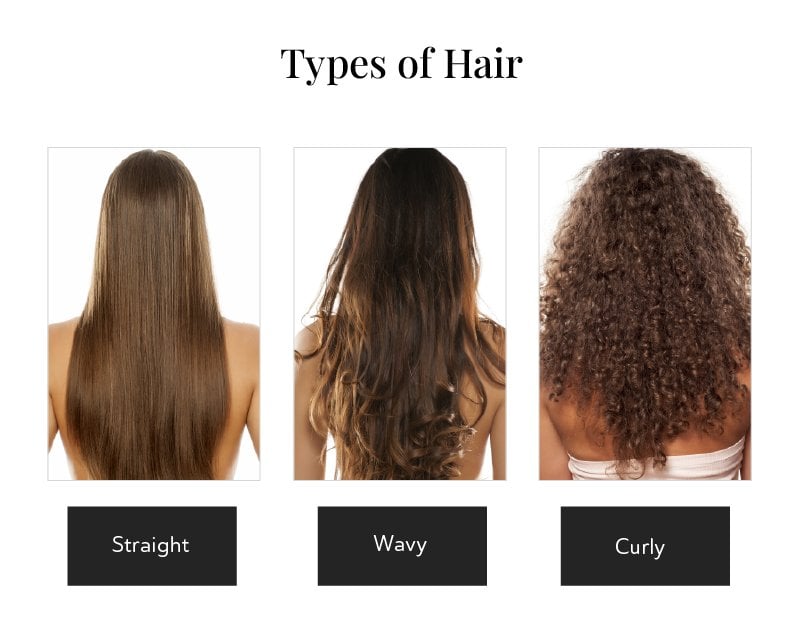
Types of Hair
1. Straight
Straight hair has no natural curl. Each strand may be fine or coarse, thick or thin, but they fall without waving from root to tip. Sub-types of straight hair are:
-
1A - Stick straight
-
1B - Straight with more volume
-
1C - Straight with body wave and a couple of visible S-waves, usually the neck or temples
2. Wavy
Wavy hair lies in the middle of the straight and curly categories. This hair type has a gentle wave that’s more noticeable near the ends. Moreover, it’s more prone to frizz than straight hair. The sub-types of this hair type are the following:
-
2A - Thin wavy hair
-
2B - Medium wavy hair
-
2C - Thick wavy hair
3. Curly
Curly hair results from oval-shaped hair follicles. The flatter the oval is, the curlier the hair will be. This hair type has distinct curls that don’t straighten out, no matter how much you straighten them. The sub-types of this hair type are the following:
-
3A - Loose curls
-
3B - Medium curls
-
3C - Tight curls
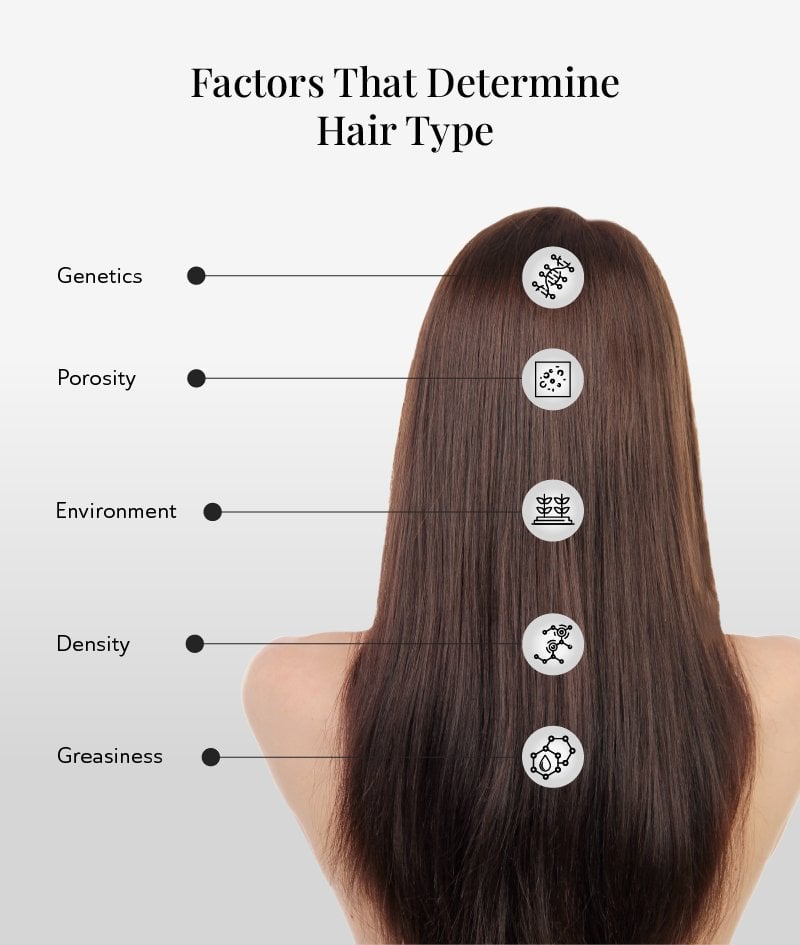
Factors That Determine Hair Type
1. Genetics
Research suggests that hair type and texture are inherited—the amount of curly hair genes inherited determines the degree of curl. However, children of parents with curly hair can have straight hair due to the variety of hair textures in families.
2. Porosity
Porosity is your hair’s capacity to absorb and keep moisture. The idea is that the more porous it is, the more moisture and products it can absorb.
Recognizing the porosity level of your hair can aid you in selecting the appropriate hair products. You can assess your hair's porosity by immersing a single strand in a cup of water. If it floats, it has low porosity; if it sinks, it has high porosity.
-
High porosity
High porosity means many pores in the hair cuticle, often due to the frequent application of chemical-based products or treatments.
-
Normal porosity
Usually, the hair strand will float in the middle of the water, indicating that it absorbs just enough moisture. It requires less maintenance and can hold any hairstyle with ease.
-
Low porosity
Your hair has low porosity if it floats on the water’s surface. Low porosity takes a long time to dry because the hair cuticles have fewer pores, limiting the hair’s ability to absorb moisture.
3. Environment
The environment can also significantly impact hair, especially its texture. Humidity can make the hair frizzy or curly, whereas cold winter air can make hair dry and frizzy. Moreover, extensive sun exposure can damage hair cuticles, shafts, roots, and ends.
4. Density
Hair density is the number of individual hair strands on your scalp. There are three levels of hair density, and you can determine your hair density by grabbing a large section of your hair and pulling it aside. The amount of visible scalp determines your hair density.
-
If your scalp is easily visible, you have a thin hair density.
-
You have medium hair density if you can partially see your scalp through your hair.
-
You have thick hair density if you can hardly see your scalp.
5. Greasiness
Oily hair accumulates buildup quickly. To determine scalp oiliness, wash your hair the night before and let it air dry. In the morning, press a tissue to the scalp, particularly near the crown and ears. This will help you know how often to wash your hair and which products to use.
-
You have oily hair if the tissue paper has a significant greasy patch. Wash your hair four to five times a week.
-
If there’s minimal evidence of oil, you have normal hair. Wash your hair once or twice a week.
-
If no oil is on the tissue paper, you have dry hair. Use products that add and retain moisture to your locks.
-
You have combination hair if oil is present only in some regions of your scalp, such as behind your ears and over your temples.
Following a proper hair care routine that suits your hair type is crucial to maintain its health, softness, and overall condition. Building a proper hair care routine minimizes the chances of using products that harm your scalp more. By knowing the products and tools, you can use them to improve your hair condition.
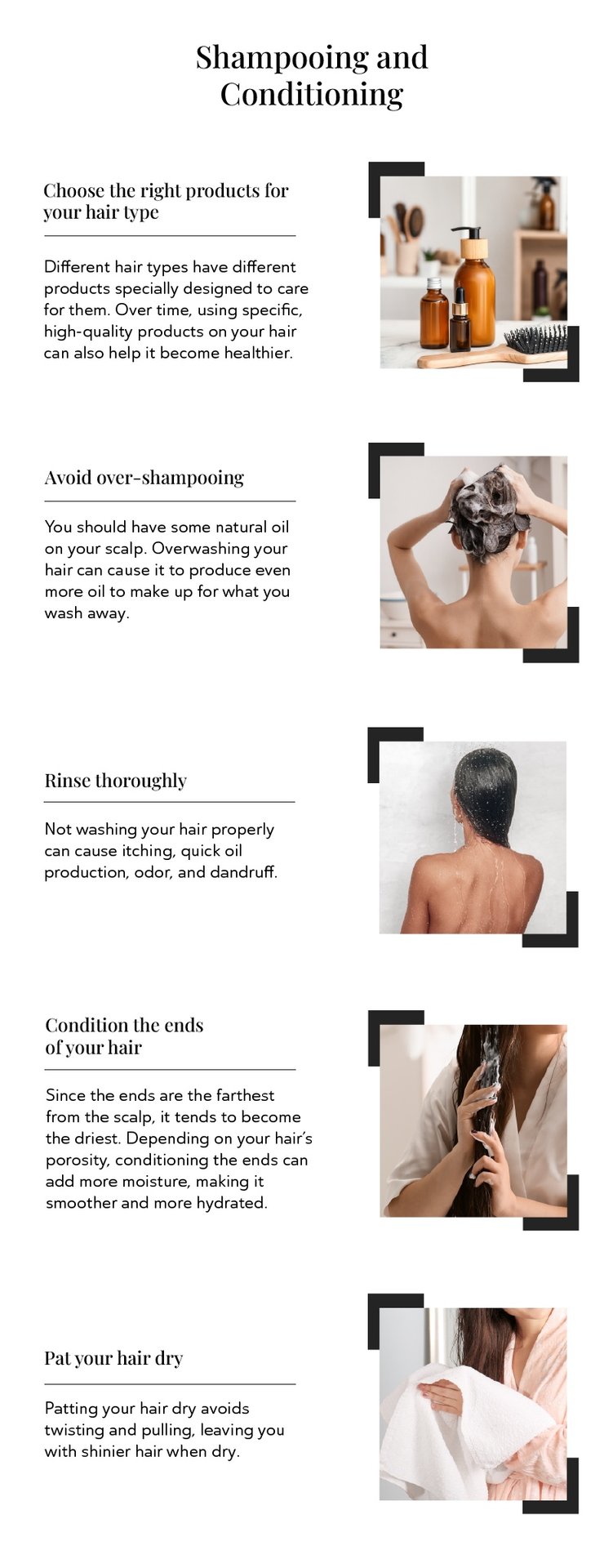
Shampooing and Conditioning
Your scalp generates sebum that moisturizes and defends it from infections. However, excessive sebum can lead to oily hair, an elevated risk of infections, and an unpleasant smell. Adopting these practices can enhance your hair and scalp care routine:
-
Choose the right products for your hair type
Several hair concerns may arise from using inappropriate products. Knowing your hair type can help you identify the appropriate balance your hair requires. Additionally, high-quality hair products lead to better results as they’re designed to nurture and protect your hair.
-
Avoid over-shampooing
It’s important to note that your scalp requires some natural oils, and stripping them away can result in dryness. If your scalp feels oily, washing it a few times a week can help. Hairstylist Kasey Bertucci, the co-founder of Salon 120 West in Boston, suggests that the ideal frequency for washing your hair depends on hair type, texture, and daily routine.
-
Rinse thoroughly
To ensure a healthy rinsing routine, use warm water for cleansing and cold water for conditioning. Proper rinsing will open the hair cuticle and lock in moisture, preventing itching, odor, and dandruff.
-
Condition the ends of your hair
Conditioning is key for healthy hair—Chuck Bass, a New York City-based hairstylist, recommends conditioning every time you shampoo to restore moisture and softness and detangle while introducing hair vitamins and nutrients. This helps prevent breakage and split ends, as the ends are the driest.
-
Pat your hair dry
Gently patting the hair with a towel instead of rubbing or twisting it tightly can result in a flatter hair shaft, which makes the hair shinier after drying. Moreover, this technique reduces the likelihood of breakage that can cause split ends.
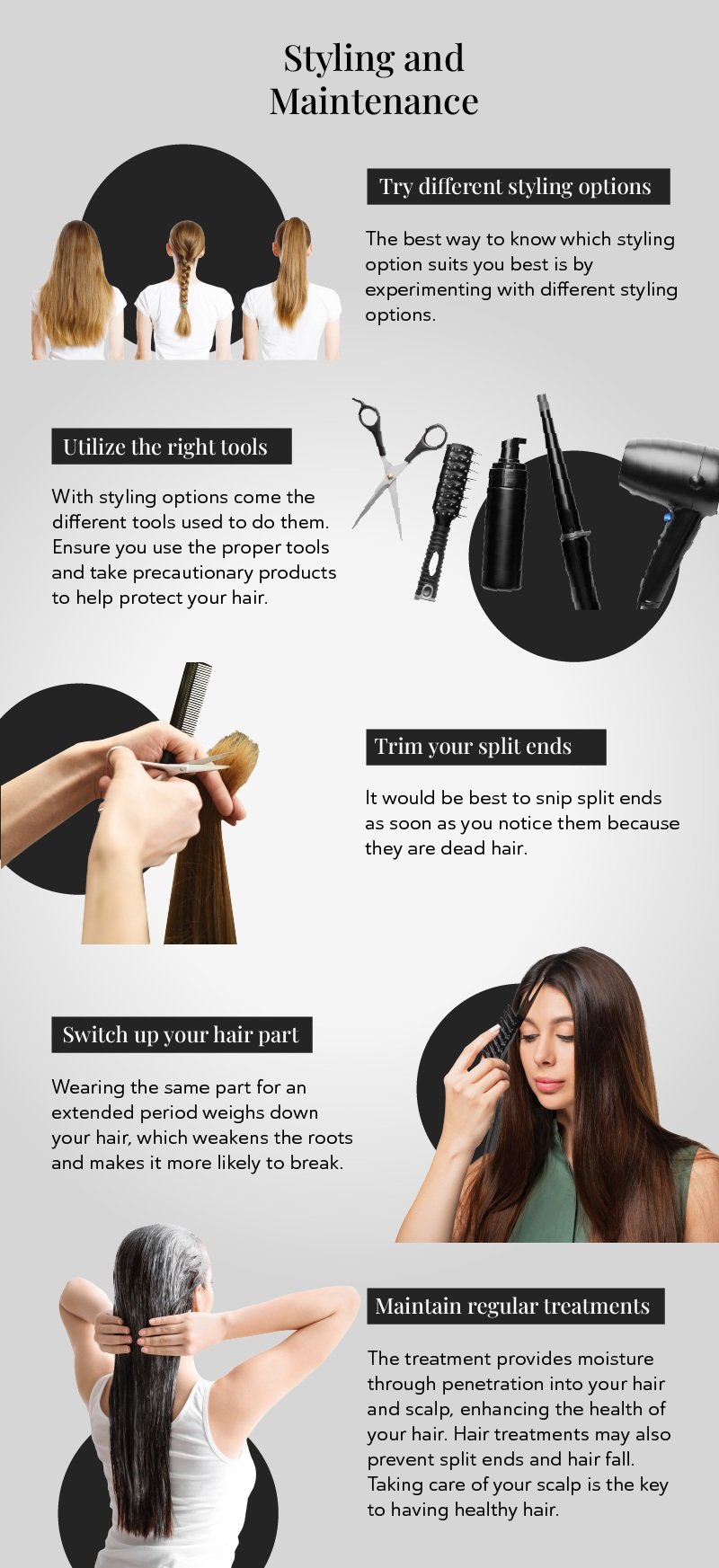
Styling and Maintenance
Maintaining healthy hair is crucial for physical and mental well-being and shouldn’t be overlooked. You can consistently achieve healthy and lively hair with appropriate upkeep and attention. Here are some styling and maintenance tips to help you achieve healthy and stylish hair.
-
Try different styling options
Experiment with different styling options to find the one that suits you best. Air-drying, blow-drying, and heat-styling are some options. Not only will it change your look, but it can also help you feel more confident, show off your self-care, and raise your self-esteem.
-
Utilize the right tools
Use your usual brush and comb for effortless styling. For a more defined look, you may need heat-styling tools like a flat iron, curling iron, or a hair dryer. Before using heat, apply a heat protectant to help protect your hair.
-
Trim your split ends
Despite following various hair tips and taking good care of your hair, split ends may be unavoidable. When this happens, book an appointment with your hairdresser and have your split ends cut off.
Cutting your hair promotes hair growth. Although it may seem counterintuitive, split ends affect the appearance and texture of your hair and make it appear shorter and thinner at the ends.
-
Switch up your hair part
Continuously wearing the same hair part can cause your hair to become heavy on one side, resulting in weaker roots and, ultimately, breakage. By changing your part to the opposite side, your hair roots will stand upright, allowing them to breathe.
-
Maintain regular treatments
Hair treatments offer several advantages, including preventing hair damage by deeply penetrating the hair and scalp to provide essential moisture and nutrients, promoting overall hair health. Additionally, hair treatments can help manage hair fall and prevent split ends. Remember that proper scalp care is important for maintaining a healthy hair.
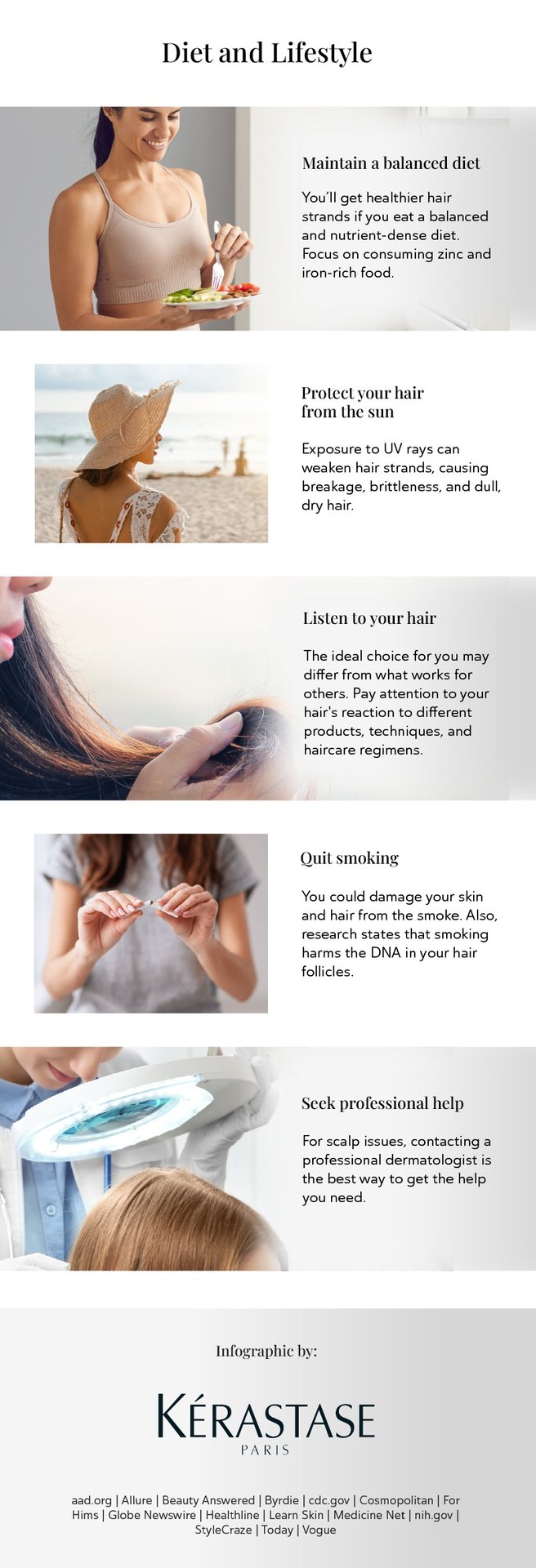
Diet and Lifestyle
A balanced diet with essential vitamins and minerals is crucial for healthy hair growth and maintenance. Experts recommend incorporating the following diet and lifestyle tips to promote healthy hair growth:
-
Maintain a balanced diet
Your diet heavily influences the health of your hair. Consuming nourishing foods high in vitamins and nutrients can positively affect the health of your hair follicles, resulting in hair that appears lustrous and shiny. Board-certified dermatologist Ainah Tan recommends eating a diet rich in leafy vegetables and sources of iron, as both iron and vitamin D help build and strengthen hair.
Additionally, zinc and iron are essential nutrients that play a crucial role in promoting healthy hair growth. Iron deficiency has been linked to certain types of hair loss. In a study published in the Dermatology Practical and Conceptual journal, researchers found that increasing zinc intake led to improved hair growth, in addition to linking insufficient iron levels to hair loss.
-
Protect your hair from the sun
Prolonged exposure to UV rays can harm hair, leading to weakened strands, breakage, brittleness, and a lack of shine and suppleness. A study shows UVB causes hair protein loss, while UVA radiation causes color changes. When hair absorbs radiation, the photosensitive amino acids degrade, producing free radicals that can negatively impact hair proteins, particularly keratin.
-
Listen to your hair
Finding what works best for you is key. Everyone's hair and scalp are unique, so the products that work for one person may not be the best choice for you. It's important to observe how your hair responds to different products, techniques, and haircare regimens and make changes accordingly.
-
Quit smoking
You could damage your skin and hair from the smoke. Research states that smoking harms the DNA in your hair follicles and could lead to hair loss. It’s because cigarette smoke is a form of pollution that can damage your hair and skin.
To promote healthy hair growth, quitting smoking may be the best action.
-
Seek professional help
If you have any hair worries, it’s best to consult a healthcare professional, such as a dermatologist, for expert advice and direction to achieve your desired outcome.
Proper Hair Care Starts with You
Taking proper care of one’s hair is essential for everyone. Customize your haircare routine to fit your unique hair type and desired looks. Working on your hair will pay off with soft, sleek, and shiny locks. Invest the extra minutes, and you'll have confidence in your beautiful hair!
Proper diagnosis is essential to cater to your unique hair care needs. It could be the perfect solution if you're curious about how to get the most out of your hair. Kérastase has developed a revolutionary diagnostic tool to help you discover what your hair needs to look its best.
Don’t be afraid to experiment and try new styles, techniques, and routines until you find the best one. Kérastase offers a wide range of products, such as Genesis and Elixir. You can easily incorporate them into your hair care routine to help you build your hair care arsenal.
If you want to learn more about your hair health, try Kérastase’s online diagnostic tool, talk to an expert via Kérastase’s Facebook chat, or book an in-salon hair and scalp diagnosis via the L’Oréal Salon Shop.
Use Kérastase's online diagnostic tool to learn more about your hair and scalp health. You can also talk to any of our experts via Facebook chat or book an in-salon hair and scalp diagnosis via the L'Oréal Salon Shop to know the best treatment for dry and damaged hair.